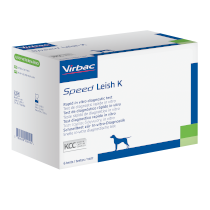
Rapid combined detection of canine vector-borne diseases
Dog
Diagnostic test
Combined rapid test for Dirofilaria immitis antigens and Leishmania infantum, Ehrlichia spp, Anaplasma platys, Anaplasma phagocytophilum antibodies in dogs.
Rapid and easy-to-use
Detection of 4 vector-borne diseases (5 pathogens) using only 3 drops of blood.
For routine screening in endemic areas or as a diagnostic test in presence of suggestive clinical signs.
Dirofilariasis, Leishmaniasis, Ehrlichiosis, and Anaplasmosis are vector-borne diseases prevalent worldwide, particularly in the Mediterranean Basin in Europe.
Canine vector-borne diseases (CVBDs),particularly tick-borne diseases, often present with subtle or absent clinical signs, making asymptomatic carriers a significant risk for disease transmission. Concurrent infections with multiple CVBD agents are also a concern in endemic regions. Therefore, rapid diagnostic tests are critical to detect these infections, both in symptomatic and asymptomatic dogs. Testing dogs regularly is essential for successful preventive measures, justifying more indepth examinations and rapid treatment implementation.
Dirofilaria immitis, a filarial worm transmitted by mosquitoes, is responsible for cardiopulmonary dirofilariasis (heartworm disease) in dogs and cats. The detection of circulating antigens indicates the presence of adult worms and the possibility of an occult infection (in 30% of cases, microfilariae are not detectable in the blood).
Canine leishmaniasis is caused by the protozoan parasite Leishmania infantum, which is transmitted by the sandfly (Phlebotomus spp.). It often manifests as non-specific clinical signs due to complex immune responses.
Following infection, clinical signs often go unnoticed. The detection of anti-Leishmania antibodies indicates exposure to the parasite.
Canine ehrlichiosis is a bacterial infection caused by Ehrlichia canis, transmitted by the brown dog tick (Rhipicephalus sanguineus). Ehrlichiosis manifests with variable and often subtle clinical signs, which makes diagnosis challenging.
The detection of anti-Ehrlichia antibodies indicates potential exposure to the bacterium.
Canine anaplasmosis is a bacterial infection primarily caused by two different rickettsial species in dogs, which differ based on the geographical distribution of the vector tick: Anaplasma phagocytophilum transmitted by Ixodes ricinus and Anaplasma platys transmitted by Rhipicephalus sanguineus.Testing for antibodies against both species indicates potential exposure to either agent.
When to use Speed Vector 4 ?
In endemic regions, due to the potential coexistence and clinical significance of these four vector-borne diseases, the Speed Vector 4 test is recommended for the following purposes:
Routine systematic screening to facilitate the implementation of appropriate preventive and prophylactic strategies.
Confirmation of clinical suspicion of cardiopulmonary dirofilariasis or occult infection by the detection of Dirofilaria immitis antigens and evaluation of potential co-infections
Differentiation between ehrlichiosis, anaplasmosis, and leishmaniasis in cases presenting non-specific but compatible clinical signs.
Early detection of exposure in dogs living in or returning from endemic areas that have not received preventive measures.
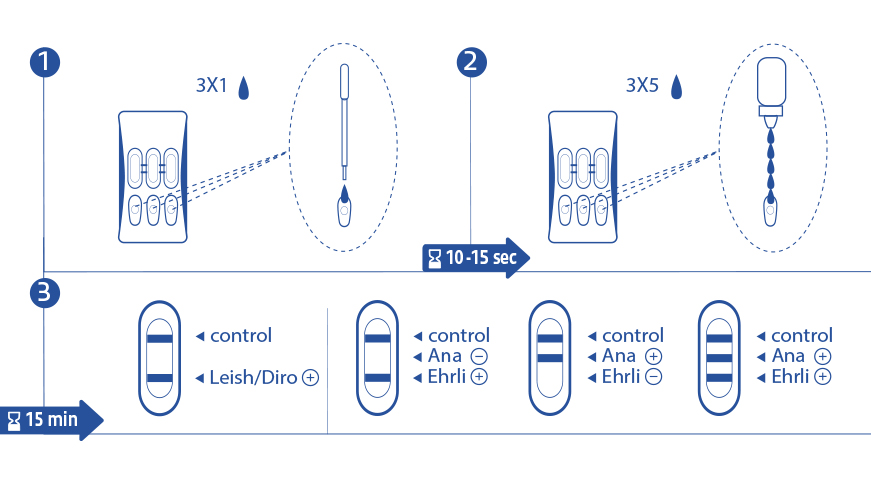
Quick guide
For complete instruction, please refer to the product notice.
1. Add 1 drop of sample into the sample well.
2. Wait 10 to 15 seconds then add slowly 5 drops of reagent into the sample well.